Analyze Any Transaction —
Across the EVM Ecosystem
High-precision simulation of onchain transactions into structured, inspectable execution traces.
Build Structured Intelligence from Executed and Simulated Transactions
The Dedaub Transaction Analysis engine leverages large-scale transaction simulation and execution tracing to construct an indexed database of structured transaction artifacts. By replaying transactions against live network state and reconstructing full call trees, event emissions, fund transfers, and state transitions, the system transforms raw EVM execution into queryable, high-fidelity transaction intelligence. This infrastructure enables systematic analysis, pattern detection, and deep technical inspection across indexed onchain activity.
Structured Transaction Intelligence
The platform simulates transactions against the live state of supported EVM chains, reproducing real execution conditions before they occur onchain. By executing against the latest network state, it reveals whether a call will succeed, revert, trigger unexpected behavior, or interact with vulnerable contracts—without broadcasting the transaction. This enables security teams to assess exploitability, validate assumptions, and investigate attack paths with execution-level precision.

Trace Format Output
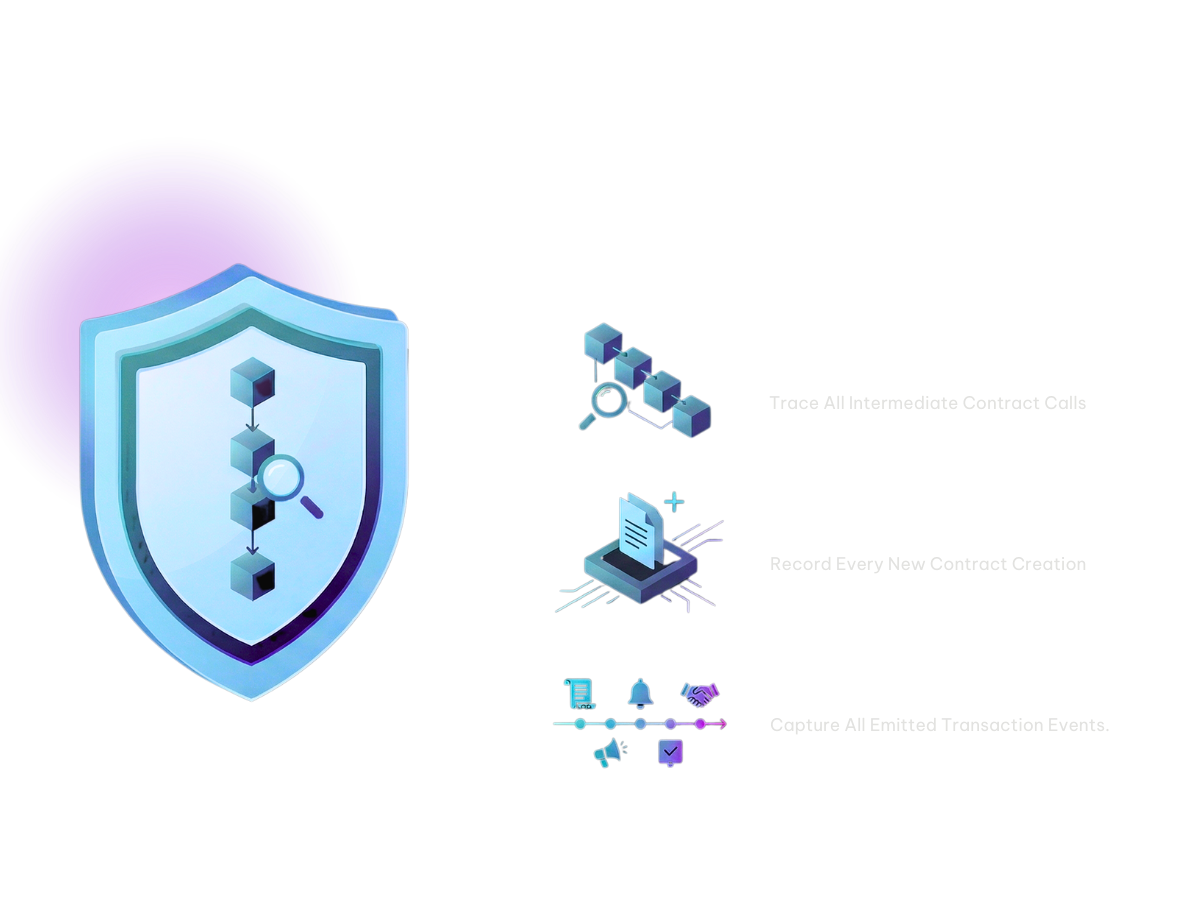
Every simulated transaction yields a detailed execution trace. This trace lists all intermediate contract calls, contract creations, and emitted events in the order they occur, providing a complete picture of the call stack and execution flow.
Fund Transfers & State Changes
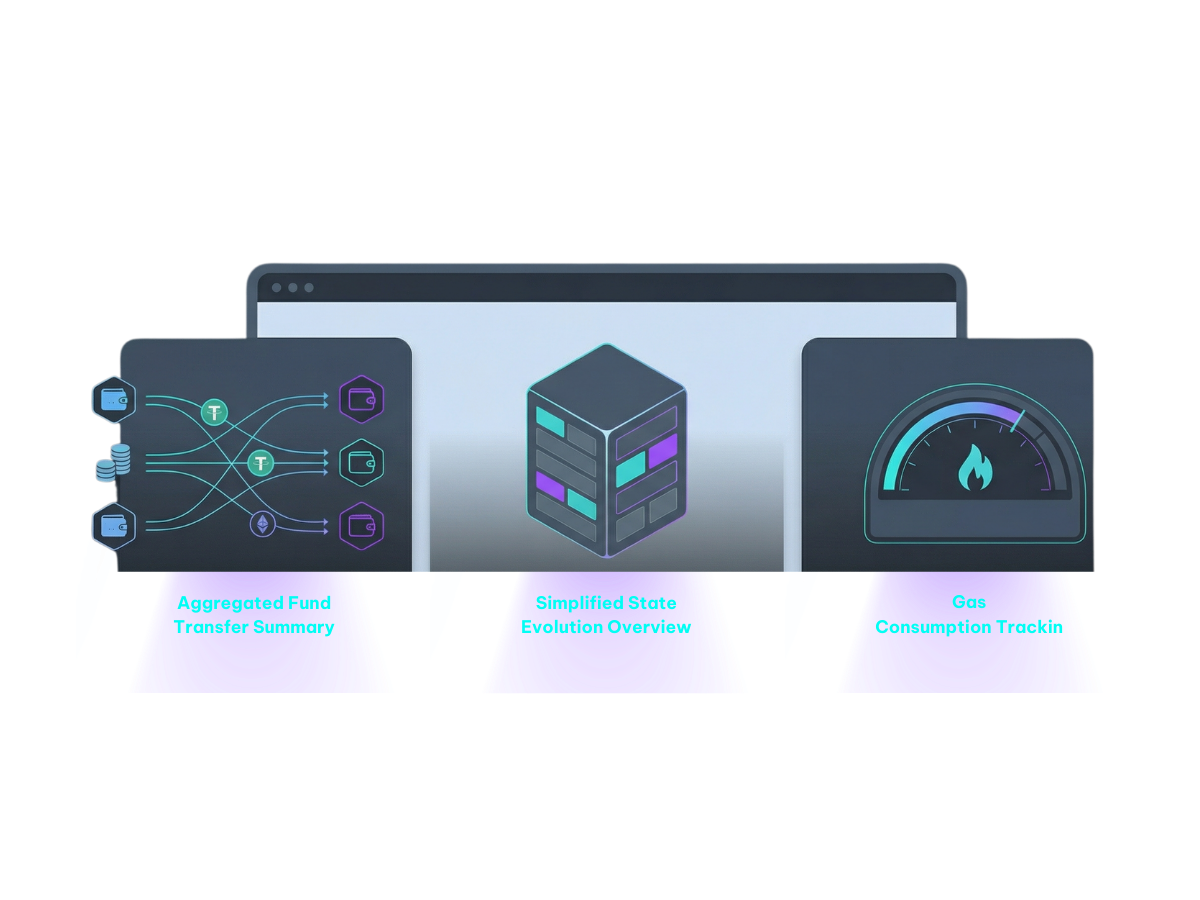
Each analyzed transaction includes both a structured fund-transfer summary and a state-change overview. The fund-transfer view aggregates all value movements—native assets and tokens—across participating addresses, clearly showing who sends and receives value as a result of execution. In parallel, the state overview highlights balance updates, storage modifications, and gas consumption, providing a concise summary of the transaction's effects without requiring low-level opcode inspection.
Decoded & Structured Output
Raw execution data is automatically decoded into human-readable representations. Event logs are matched against known ABI signatures, internal calls are labeled with contract and function names, and token transfers are normalized into structured records. This transforms opaque bytecode-level output into clear, queryable artifacts ready for analysis and Monitoring.

Raw Blockchain Data Capture
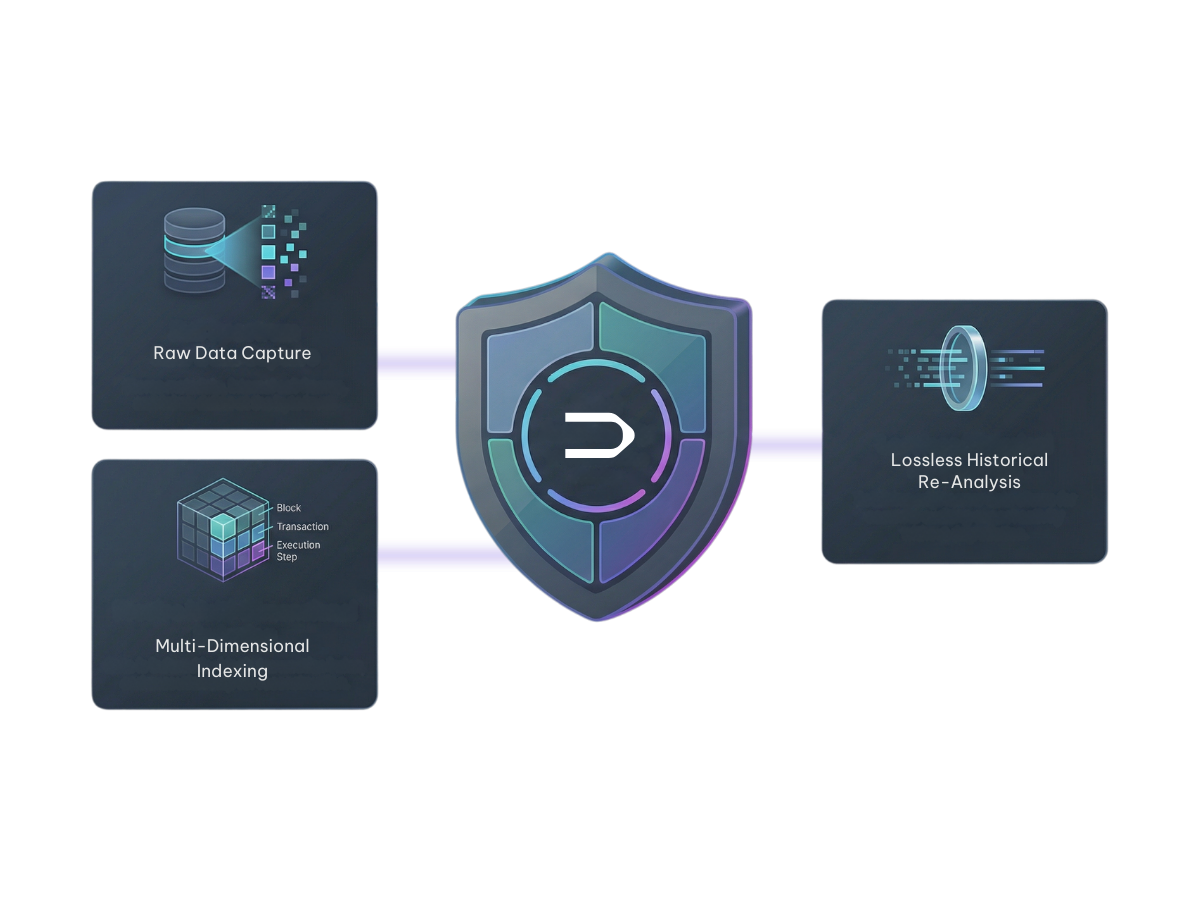
Transaction Analysis ingests and stores raw blockchain data directly from supported EVM networks, preserving execution fidelity at the lowest level. This includes full block metadata, top-level transaction fields, internal call frames, emitted logs, and token balance deltas. Each dataset is indexed by block number, transaction index, and execution step, enabling precise reconstruction of execution order and call hierarchy. By retaining raw, byte-level data alongside decoded representations, the system ensures accuracy, auditability, and the ability to re-analyze historical activity without data loss.
Free for Individuals. API Access for Organizations.
Create Your Free Account Now
Security Suite LoginAre you looking for security audits? Find out more here.